 Search “”


 020 4524 3010
 support@giftcampaign.com
 Minimum quantity is: 5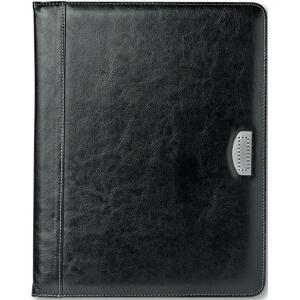




Best seller


Popular searches

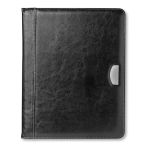
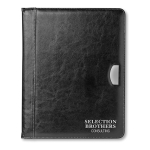
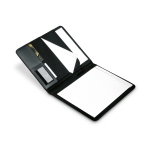
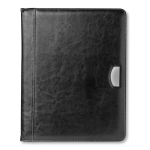
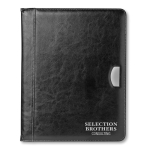
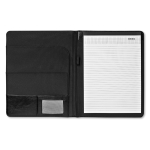
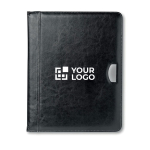
REF. 30094
|Next arrivals
 18 happy customers
| Colour | Stock | Next arrivals |
|---|

Front
1 colour

Inside
Without printing
5
25%
10
25%
25
25%
50
25%
100
25%
Other
The shipping times are shown for the selected quantity and printing technique above.
Today
Standard
Express
The dates provided are approximate and may vary depending on the payment date (for non-printed orders) or from the approval of the virtual sample plus payment (for printed orders).
Free
Total
--
Unit price:
--
Total (20% VAT):
--
For this product, please request a virtual sample – we'll quickly send you a quote with the best price!
Product code
30094
Starting from
5 Units
Size
31.5 x 25 x 2.6 cm
Weight
612 gr
Material
PU leather (synthetic)
Country of manufacture
China
Intrastat code
4202 92 19
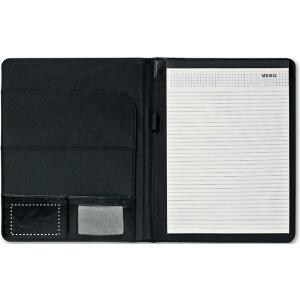
Number of pages
20
Type of pages
Lined pages
In our collection since
June 2017
Shipping country
Poland
Minimum quantity for pallet shipping
625 Units
Outer box measurements
53 x 27 x 33 cm
Outer box volume
0.047 m³
Outer box weight
15.4 kg
Quantity per box
25 Units
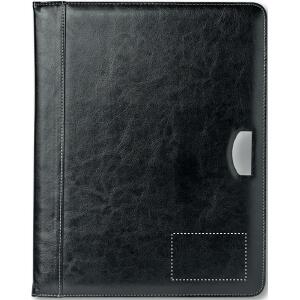
Available printing areas
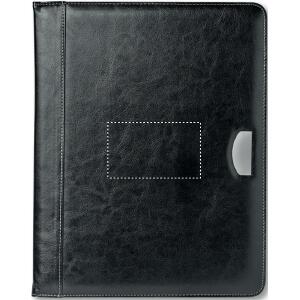
Position: front
Size: 60x100 mm
Screen Printing: maximum 1 colour
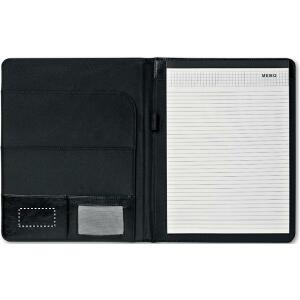
Position: inside
Size: 30x60 mm
Screen Printing: maximum 1 colour

Intense solid colours with excellent value for money
Screen printing is a printing technique in which ink is pushed through a mesh stretched over a frame, with areas that should not be printed blocked off. It is ideal for logos with few colours and defined shapes, and is very cost-effective for large quantities on flat surfaces such as bags, folders, or T-shirts.


/100
This index is a transparency tool that enables you to understand and compare the impact of our products. We assess key criteria clearly and objectively, including materials, origin, packaging and certifications, to help you make more informed and responsible purchasing decisions.
Discover how we calculate our Sustainability Index.Excellent experience from start to finish. I initially contacted the Spanish team, who put me in touch with their UK colleagues the very same day. (...)

We were working with Caitlin, an the service, delivery and final products were excellent.
Thanks for the great products will order more soon.
Good quality merch. Great communication throughout and on time delivery. We will be coming back for more merch soon!
Great experience with Gift Campaign, i only ordered them on Thursday 26th February and they have already arrived on Monday 2nd March :)
Quick, easy service and any edits were made quickly so we could see the final product before ordering.
Excellent communication, great products, printed well and delievered quickly. Thank You!
Great quality and good response speed. Had a very smooth experience.


From £8.64

Delivery
19 happy customers


From £2.24
Delivery
26 happy customers


From £7.43
Delivery
33 happy customers