
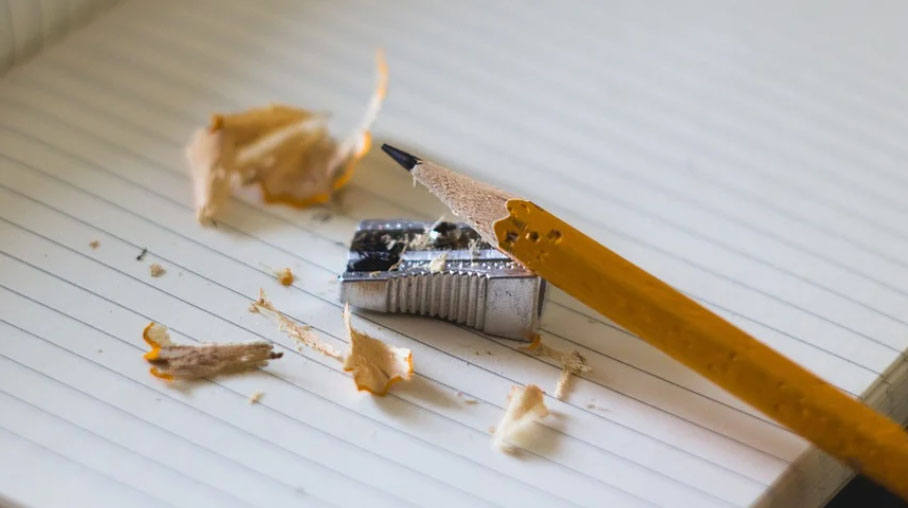
You have probably written with a pencil countless times. As with so many everyday objects, they are such a familiar part of our lives that we rarely stop to think about how they are made or how they work. In this case, do you know what pencil leads are made of? At first glance, the answer is graphite and clay. However, there is much more to it than that.
The core of a pencil is a graphite rod combined with grease and clay, with the proportions varying depending on the intended use of the writing instrument. This rod is enclosed within a wooden cylinder, with whatever design details the brand chooses to add: it may be smooth, hexagonal, or a more elaborate model in the case of mechanical pencils. If coloured leads are required, pigments are added to the clay.
The manufacturing process begins by mixing graphite powder with clay. Both components are ground very finely. Water is then added, and the mixture is shaped into the familiar elongated pencil lead. However, several more steps are needed before the leads are encased.
The process continues by immersing the leads in oil or molten wax, which filters into the tiny holes within the graphite-and-clay rod. This step is carried out to achieve a smoother writing experience. Moving towards the final stages of production, the leads are inserted into wooden pieces, which are then shaped into the form we all recognise. The finishing touches include painting and varnishing these writing tools. However, whether we are talking about personalised pencils, logo-branded pencils, or standard pencils, the final finish will vary according to their intended function.
Understanding the Different Types of Pencil Leads
The final result of a pencil lead also depends on whether we want it to produce lighter strokes (in which case it will need to be harder), or whether we expect it to create darker lines (which requires softer leads).
This greater or lesser hardness depends on the original mixture of clay and graphite prepared at the beginning of the manufacturing process. The higher the graphite content, the softer the final lead will be. And, as you may have guessed, the more clay it contains, the lighter the mark it produces.
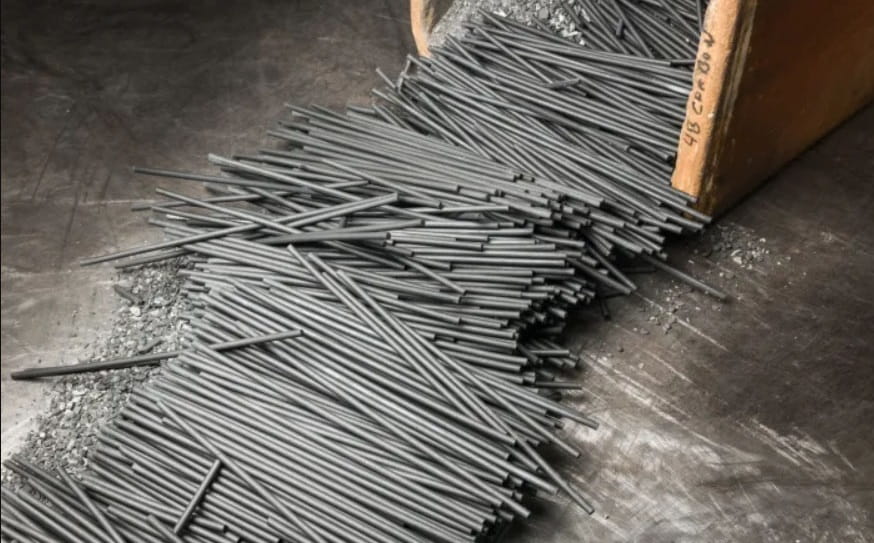
You have probably wondered while reading this: what about the leads used in mechanical pencils? The process is the same, although naturally the final stages involving the wooden casing are omitted.
Professionals who regularly work with promotional pencils — such as designers or illustrators — will already know how to distinguish the different types of lead used in each model. We are referring to the letters H, F and B (which are often combined with numbers as well).
If you are not particularly familiar with pencils, here is what these alphanumeric combinations mean. The letter H stands for a hard lead. The higher the number, the harder the lead becomes, although grades above 4H or 5H are generally reserved for more specialised uses.
The letter B refers to softer leads (although the initial actually comes from “black”). It is worth remembering this colour reference, as these pencils produce darker and more intense lines. The most common grade is 2B, while higher numbers are usually intended for more specific tasks. In addition, softer leads are not commonly used in mechanical pencils because they break more easily.
Finally, there is F (from “fine”). This is considered a middle ground between H and B grades, although it is relatively uncommon and generally reserved for more professional work.
If you have just checked one of the pencils on your desk, it is very likely that you will have seen combinations of letters on it. For example, HH refers to extremely hard leads. HB indicates a medium hardness, similar to F grade (although not quite as hard), and it is one of the most common compositions because it is considered ideal for writing. Finally, there is BB, which is used for particularly soft leads.
Beyond graphite, there are also pencils made from charcoal. However, their production is generally not considered as cost-effective as that of graphite pencils.
As you can see, understanding the composition of a pencil lead and how it is manufactured is important — especially if you are considering ordering a large batch of printed pencils featuring your company logo. Were you already aware of these differences, or has this been something new for you? We would love to hear about your experience in this area.