
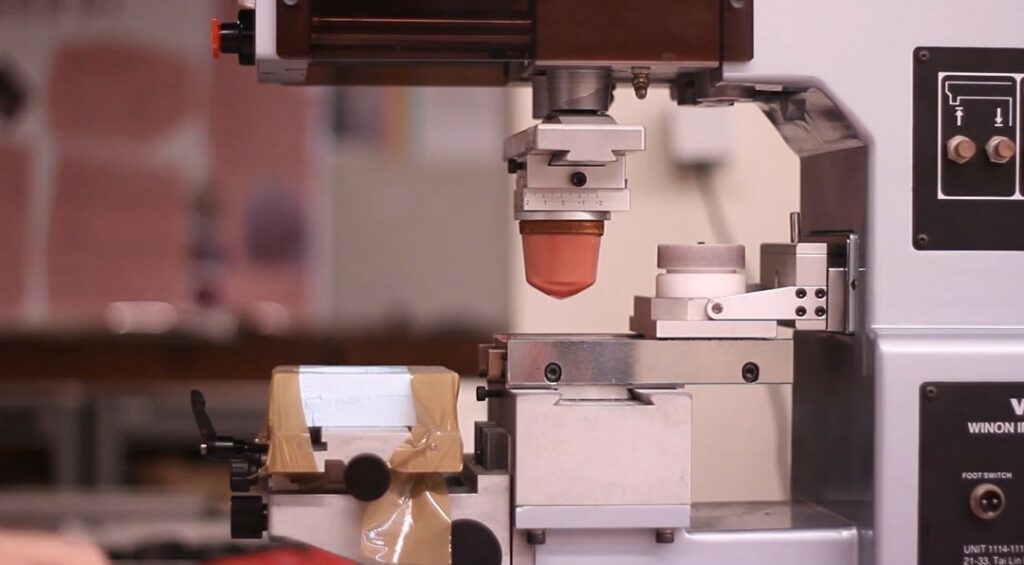
Pad printing is an indirect printing technique which uses a flexible silicone pad to transfer ink from a metal or plastic plate, known as a cliché, onto a surface. More specifically, a design is engraved onto the plate and then coated with ink. The previously mentioned silicone pad then comes into play, pressing onto the cliché to pick up the ink and transfer it onto the object to be customised.
It is worth noting that, thanks to the flexibility of the pad, pad printing allows designs to be printed onto irregular, curved, or hard-to-reach surfaces. In addition, it is also suitable for printing logos in more than one colour. To achieve this, successive prints are carried out using different plates, each with a different ink colour.
Advantages of pad printing
It is no coincidence that pad printing is one of the most common and highly valued printing techniques in the merchandising industry. Its adaptability and many advantages make it possible to customise gifts and products efficiently, with highly effective results. Here are its main benefits:
- Cost-effective: Once the cliché has been created, it offers a highly competitive cost for medium and large print runs, making it a cost-efficient option for large-scale promotional campaigns.
- Flexible: Thanks to the silicone pad, it adapts perfectly to complex shapes. It can be applied to curved, irregular, or textured surfaces where other techniques cannot reach.
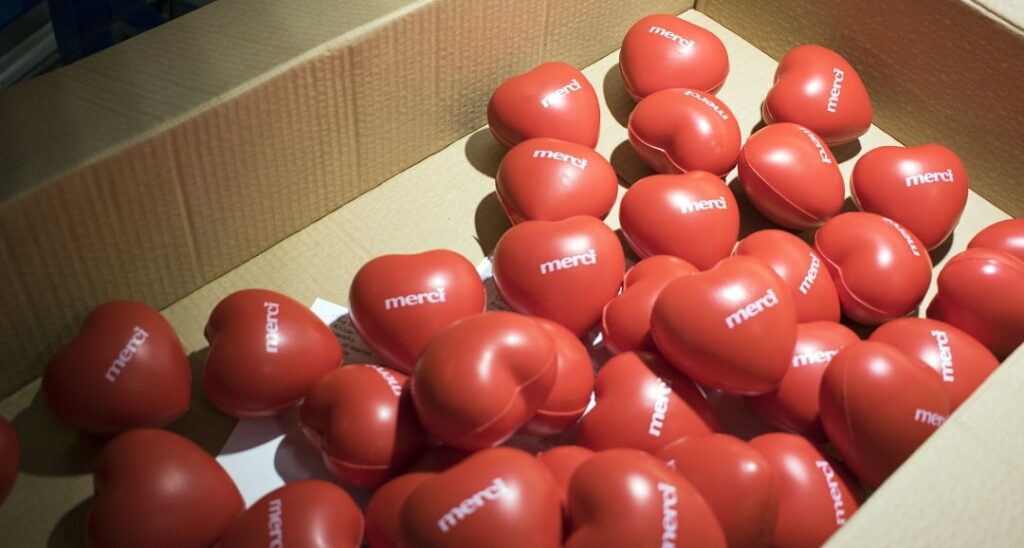
- Material compatibility: It stands out for delivering excellent results across a wide range of materials, including plastic, wood, glass, ceramic, and synthetic leather.
- Precision: It achieves very sharp results with a high level of detail, making it especially valued for small logos, fine lines, and small text.
- Good adhesion: It ensures a durable and resistant print, particularly on products that are not exposed to frequent wear or washing.
- Fast production: It is a quick and highly automatable technique, with machinery capable of producing continuous and consistent prints.
- Multicolour printing: Although each colour requires its own process, multicolour prints can still be achieved with good alignment and precise results.
- Wide range of applications: It is used across all kinds of industries, from merchandising to automotive, pharmaceutical, and electronics sectors, for example.
Disadvantages to consider
Despite its advantages, pad printing also has certain limitations.
On the one hand, as it is a technique based on solid inks, it is not suitable for printing full-colour images, gradients, or photographs. Furthermore, because each colour requires a separate cliché and an additional printing process, production time and costs increase for multicolour designs.
On the other hand, although the technique adapts well to irregular shapes, the printable area is usually quite small. As such, it is not the best option for products with large customisation areas, such as bags or T-shirts.
Finally, another drawback is that this method is not recommended for printing onto metal surfaces. However, there are highly effective alternatives for printing your logo onto this type of material. Laser engraving, for example, is a precise and durable technique that represents an excellent option.
What are the differences between pad printing and screen printing?
Both printing techniques are widely used in the customisation of promotional gifts. In fact, they share several similarities: they are cost-effective, allow logos in multiple colours, and are durable when properly cared for. However, in practice, they are used for different applications.
Screen printing is based on the direct transfer of ink through a stretched mesh onto the product, making it ideal for large, flat surfaces such as textiles, bags, or folders. Pad printing, by contrast, stands out for its ability to adapt to curved or irregular surfaces, making it the preferred option for small and three-dimensional products.
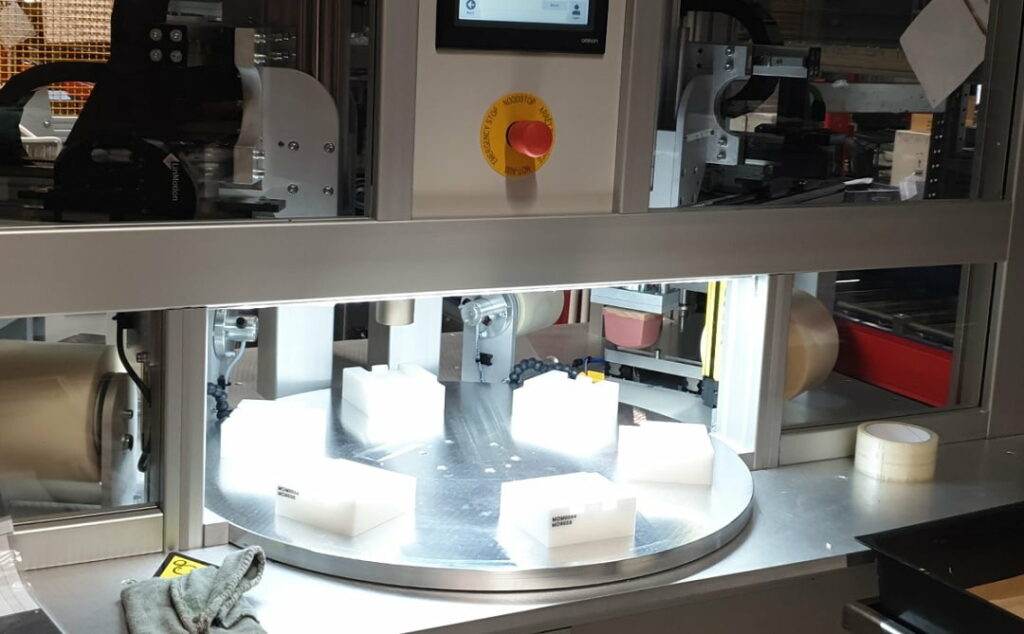
They also differ in terms of the level of detail that can be achieved in the print. While screen printing is better suited to solid colours across large areas, pad printing allows finer details to be reproduced with greater precision.
In terms of colour application, pad printing also enables inks to be applied successively. This differs from screen printing, where each layer must dry before the next print can be applied.
Finally, another important distinction relates to production volume. In this respect, screen printing is generally more cost-effective for large print runs using a single design. Pad printing, on the other hand, offers greater flexibility across a variety of objects.
Products and gifts to customise with pad printing
As we have already seen, one of the major advantages of this printing technique is its ability to adapt to the shape of small, three-dimensional objects with curved or irregular surfaces. Below, we present a selection of promotional items that are particularly well suited to this type of printing method.
- Pens and mechanical pencils: One of the favourites in corporate merchandising. In this case, pad printing makes it possible to print small logos clearly and precisely on the body of writing instruments, even on narrow or curved areas such as the cap.
- Keyrings: Whether made from wood, plastic, or metal, keyrings often feature varied and irregular shapes. For this reason, pad printing is the technique that best adapts to their surface, allowing durable customisation with a high level of detail.
- Bottle openers and small kitchen utensils: On products such as bottle openers, corkscrews, or cutters, the printable area is usually very limited. This technique allows logos to be applied without compromising either aesthetics or functionality.
- USB sticks and power banks: These are among the most popular gifts used in promotional campaigns. Pad printing enables small, well-defined logos to be printed onto plastic, metal, or silicone surfaces, which are common materials for these items.
- Technology accessories: Gadgets such as computer mice, speakers, adaptors, or USB hubs have compact surfaces and technical shapes. Pad printing guarantees a professional finish even on products with delicate details.
A discreet technique with great potential
Although less well known than screen printing or sublimation, pad printing is one of the most powerful printing techniques in the corporate gifts sector. Its many advantages make it an essential marking method for the customisation of a wide range of promotional products — particularly small items with irregular surfaces that require logos with precise detail.
So, when space is limited and fine lines matter, pad printing can make all the difference.