
Artificial intelligence is transforming the way companies create visual content. From logos to illustrations and graphic patterns, it is increasingly common to use AI tools to generate creative ideas quickly and explore new aesthetic possibilities.
In the world of corporate merchandising and promotional gifts, this technology opens up a wide range of opportunities. It allows businesses to develop visual concepts in just minutes, experiment with different styles, and find proposals that align with their brand identity.
However, an attractive design alone is not enough to guarantee success. For it to work on a promotional product, it is essential to consider factors such as print size, marking techniques, and the material of the item.
In this article, we explain how to use AI-generated designs to create effective merchandising and what aspects you should consider before moving into production.
AI Designs Applied to Promotional Products
AI-generated designs make it possible to create images, illustrations, or patterns from text descriptions. Thanks to these tools, companies can experiment with different visual proposals without going through lengthy design processes.
In the context of corporate merchandising, these designs are increasingly used to create original illustrations for promotional products, develop graphic patterns for textile items, or generate visual concepts for marketing campaigns. They are also useful for exploring different styles before defining the final design. Most importantly, they allow for simulations of how a logo would look when printed on a specific product.
In our experience working with promotional campaigns, many companies know which product they want to give away, such as bags or notebooks. However, they do not always know what design to apply or where to place their corporate branding. In these cases, AI can be a very useful tool for quickly generating visual ideas that are later adapted to the final product.
How to Use AI to Design Corporate Merchandising: Step-by-Step Guide
Artificial intelligence can greatly simplify the creative process when developing customised items. However, to achieve good results, it’s important to follow a structured process that takes into account both the design and the characteristics of the promotional product. Below are the most common steps to create AI-generated designs that meet your advertising needs:
- Define the campaign objective: Before generating any design, it’s essential to clearly define the purpose of the merchandising. Preparing giveaways for a trade show is not the same as designing items for a product launch or an employee welcome kit. The campaign context will influence both the visual style of the design and the most suitable type of promotional product.
- Generate visual ideas with AI tools: Once the objective is clear, you can use AI tools to create visual proposals from descriptions or prompts. These platforms allow you to generate illustrations or visual concepts related to your company’s industry, brand identity, or the message you want to convey in the campaign.
- Select the design that best fits your brand: After generating several proposals with AI, it’s important to evaluate which ones best align with your company’s visual identity. At this stage, it’s recommended to prioritise clear designs that are consistent with corporate colours and that communicate the campaign message in a simple and effective way.
- Adapt the design to the promotional product: The final step is to adapt the design to the chosen promotional item. This is a key stage, as not all designs work equally well on every product. The size of the print area, the material of the product, and the printing technique can all influence the final result. For example, pens or keychains usually require simpler, more legible designs, while t-shirts or tote bags allow for more elaborate compositions. At this stage, AI becomes especially valuable, as it can help you create realistic mockups of how each design will look on different products. In other words, carefully considering all options at this step can save your company a significant amount of money.
From “Prompt” to Product: The Value of the Human Factor
As industry experts, we have witnessed how AI has increasingly become a powerful – yet not autonomous – tool. For an algorithm-generated design to be suitable for professional printing, a supervision process is required to ensure a reliable final result.
This process begins with creating a strong prompt. Without clear, concise, and detailed instructions, AI tools cannot accurately interpret your idea.
Below, we outline the key elements we have found to be essential when crafting prompts that deliver optimal results:
- Design a professional logo for a brand called “[BRAND NAME]”.
- Business/industry: [BUSINESS DESCRIPTION / INDUSTRY]
- Visual style: [minimalist / modern / futuristic / elegant / vintage / technological / organic]
- Mood or values to convey: [trust, innovation, luxury, sustainability, energy, etc.]
- Primary colors: [PRIMARY COLORS]
- Secondary colors: [OPTIONAL COLORS or “none”]
- Visual elements or symbols to include: [ICONS, OBJECTS, CONCEPTS]
- Elements to avoid: [OPTIONAL]
- Typography: [modern sans serif / elegant serif / lettering / geometric / bold]
- Logo format: [icon only / icon + text / emblem / monogram]
- Design requirements: Clean, vector-style design with a simple composition, white background, and high legibility. The logo should be suitable for branding, websites, and social media.
- Level of detail: Professional, balanced, and modern—ready to be used as part of a complete brand identity.
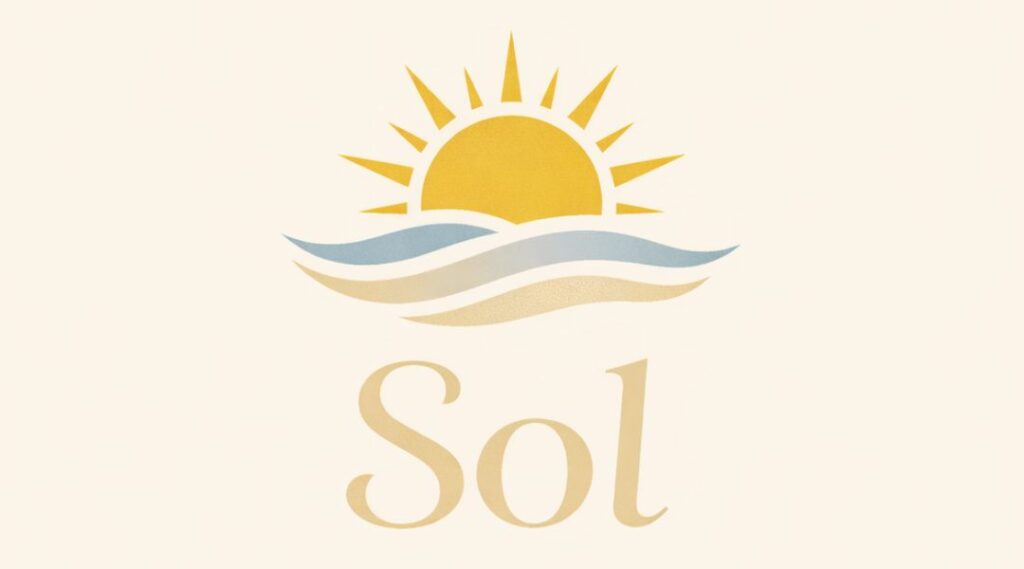
Once the AI has responded to your request with one or several design proposals, expert curation becomes essential. The human eye must filter and select the most coherent options, correcting visual issues such as symmetry inconsistencies or the generation of illegible text.
Beyond aesthetics, technical feasibility requires a vectorisation phase and resolution optimisation. Since AI tools typically generate low-quality raster images, specialised processing is needed to scale files without losing sharpness, ensuring that techniques such as screen printing or embroidery deliver flawless results.
In addition, the success of integrating AI into a corporate identity depends on precise color adjustment. Only through technical calibration can randomly generated color palettes be accurately matched to a company’s corporate Pantone standards and brand guidelines.
Ultimately, no one understands a company better than the people who work in it every day. That is why the human factor remains indispensable – both in supervising AI-generated designs and in collaborating with specialised merchandising professionals to achieve the best possible outcome.
Advantages of Using AI to Create Your Promotional Merchandise
Artificial intelligence is transforming the way companies develop creative ideas for their merchandising campaigns. Thanks to these tools, it is possible to generate visual proposals in a very short time and explore different styles before defining the final design of a promotional product.
This streamlines the creative process and allows businesses to experiment with new ideas without having to go through long design processes from scratch.
Among the main advantages of using AI-generated designs for promotional merchandise are the following:
- Rapid generation of creative ideas: AI tools make it possible to experiment with different visual styles in a matter of minutes. This is especially useful during the early stages of a campaign, when different merchandising concepts are being explored.
- Easier access to graphic design: AI enables companies without extensive design resources to create compelling visual concepts. These designs can serve as a starting point for later development and adaptation to promotional products.
- Greater differentiation at events and trade shows: In environments such as conferences or trade fairs—where many companies distribute similar giveaways—an original visual design can make a real difference. A promotional item with an eye-catching design is more likely to attract attention and remain in the hands of users for longer.
The Other Side of the Coin: Limitations of AI Designs in Merchandising
Despite their advantages, AI-generated designs also present certain limitations when applied to merchandising.
As mentioned earlier, one of the most important aspects is file resolution. Some image-generation tools produce files that do not always meet the quality standards required for professional printing. As a result, it is often necessary to adapt or vectorise the design before moving into production.
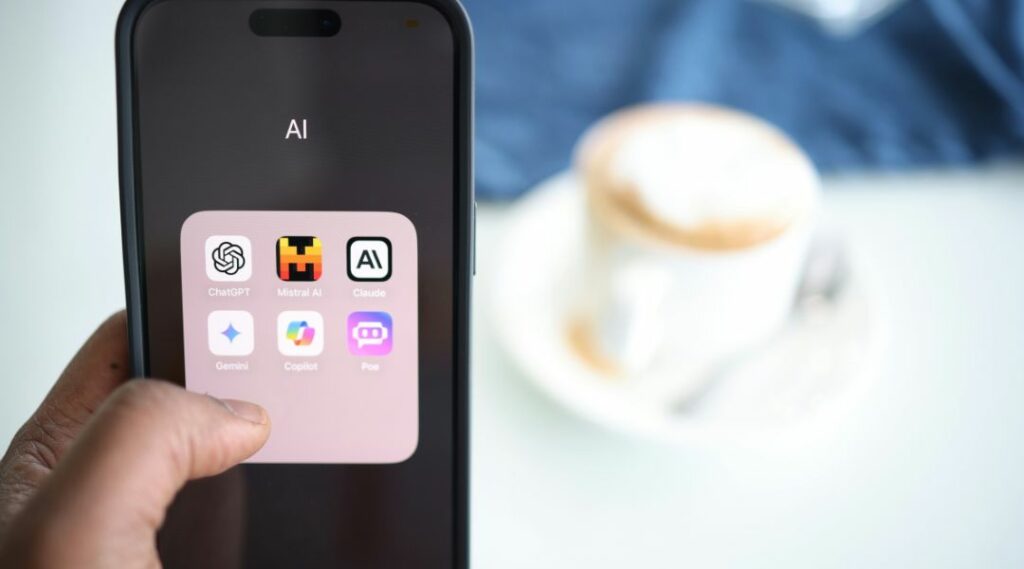
It is also important to review the terms of use of the tools you are working with. Depending on the platform, there may be restrictions related to the commercial use of generated images. For this reason, we recommend using paid versions of tools such as Midjourney or Adobe Firefly, as they typically offer commercial licenses that help protect the legal ownership of your merchandising. However, if you prefer free alternatives, tools like Gemini, ChatGPT, or Brandmark can also be viable options and generally do not present major issues.
Finally, it is essential to consider the limitations of the customisation techniques that will be used. Processes such as screen printing, pad printing, or laser engraving have specific constraints in terms of the number of colours or the level of detail they can reproduce. Therefore, some AI-generated designs may need to be simplified before being applied to the product.
Gift Campaign’s Professional Advice
When using AI-generated designs on promotional products, simplicity is often a key advantage. In many cases, clean and balanced designs deliver better results than overly complex compositions.
It is also advisable to consider the size of the product’s print area. For smaller items, such as custom pens or keychains, simple graphics and short messages tend to work best. In contrast, larger surfaces—such as clothes and other textile products—allow for more detailed and artistic illustrations.
After working with thousands of corporate merchandising orders, we have found that simpler designs, properly adapted to the product, consistently deliver stronger results in promotional campaigns.
Conclusion: The Future of Your Branding Is Intelligent
AI-generated designs are not here to replace human creativity, but to expand it. By integrating these tools into your promotional merchandising strategy, you not only save time, but also ensure that your brand is perceived as innovative, modern, and—above all—memorable.