
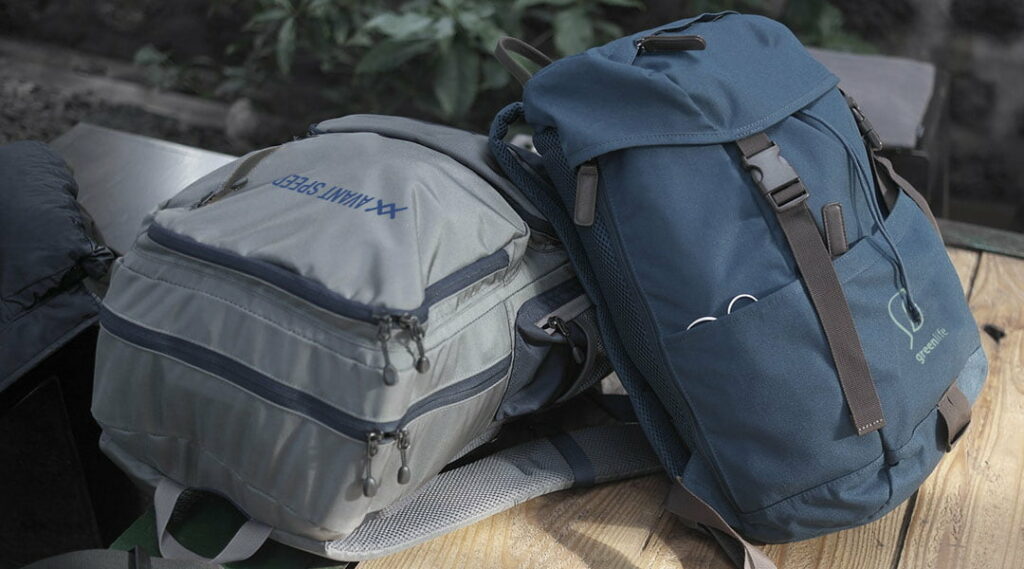
The success of backpacks over the centuries is largely due to their versatility and usefulness. They are used daily for school, work, the gym, travel, and excursions. Today, this accessory is no longer just a functional tool for carrying clothes, supplies, bottles or any other necessary items.
Over time, backpacks have evolved and, in addition to their practical function, they have become an accessory that can convey a message and reflect brand identity. Likewise, their features have also improved, with modern designs now including integrated USB charging cables, specialised pockets, headphone ports, and more.
· A Brief History
Backpacks were originally created to meet the need to carry wood, weapons, food and other supplies in a more practical way. The earliest backpack, made from animal skins, dates back to around 3,000 BC. Its owner was called Ötzi, who is believed to have been the first known hiker to use such a pack during his journeys.
In the 20th century, backpacks began to take a shape closer to what we recognise today. The first canvas model was produced by the Norwegian unionist Ole F. Bergan in 1909.
In 1922, Lloyd Nelson invented the “Trapper Nelson’s Indian Pack Board”, a rigid-frame backpack ideal for hiking. It featured an external wooden frame, fabric that helped support back movement, and a bag for storing personal belongings.
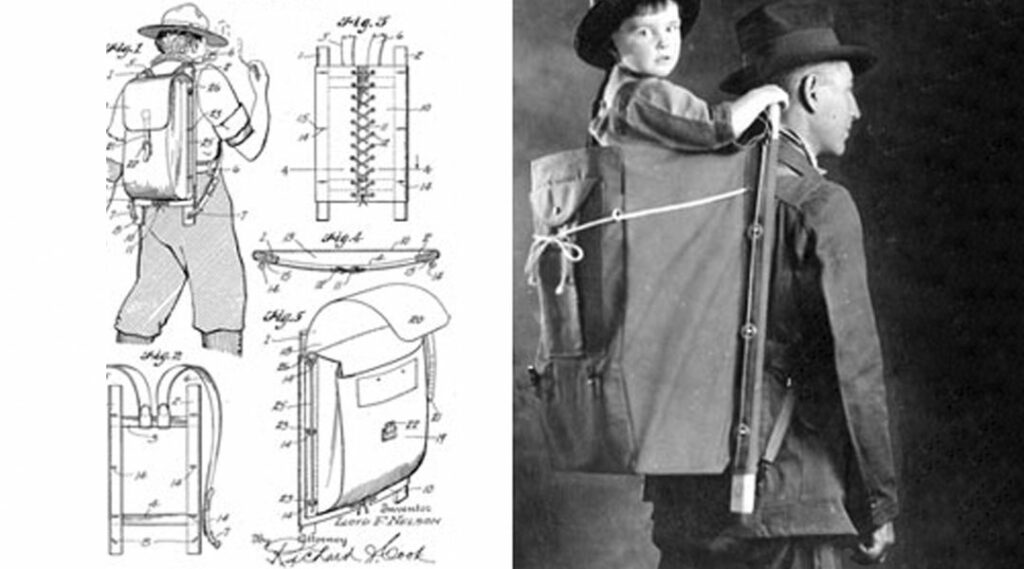
A few years later, Colonel Henry C. Merriam developed an ergonomically designed military backpack. In 1950, Åke Nordin created a cotton model with a wooden frame and leather straps, making it far more comfortable and allowing the weight to be distributed more evenly across the back.
By the 1970s, American students were already using backpacks regularly. In Europe, however, the trend did not become widespread until the late 1980s, when backpacks began replacing the traditional leather satchels commonly used for school.
· The Backpack Today
It is fair to say that the backpack has gone through several stages of evolution, adapting over time to the needs and lifestyles of each era. It has firmly established itself and has now become a fashion accessory in its own right.
Although backpacks have traditionally been associated with students and young people, an increasing number of adults now rely on them for commuting to work. As Leonardo Previ writes in his book: “Our children are backpackers: with the help of a backpack, they are better equipped to face the volatility, uncertainty, complexity and ambiguity of today’s labour market, making the most of their physical and mental abilities.”
They are comfortable and versatile, and the variety of models available is remarkable. There are small and large backpacks, casual and formal styles, colourful designs, models with practical everyday features (such as those mentioned at the beginning of this article), highly durable materials, anti-theft versions for enhanced security, and even options with RFID-protected pockets.
The days when backpacks were little more than a simple bag carried on the back are long gone.
As you may have seen in other related posts, such as our article on the history of the pen, it is fascinating to explore the origins and evolution of everyday objects and see how much they have changed since their earliest prototypes.
· Backpacks as Promotional Products
It is no coincidence that branded backpacks are among the best-selling promotional gifts. They are available in a wide range of designs suitable for virtually any occasion.
Naturally, there are also eco-friendly options, manufactured using environmentally conscious processes that reduce water consumption and make use of recycled materials, organic cotton and other sustainable resources. These models are particularly well suited to companies that are committed to sustainability and reducing their environmental impact.
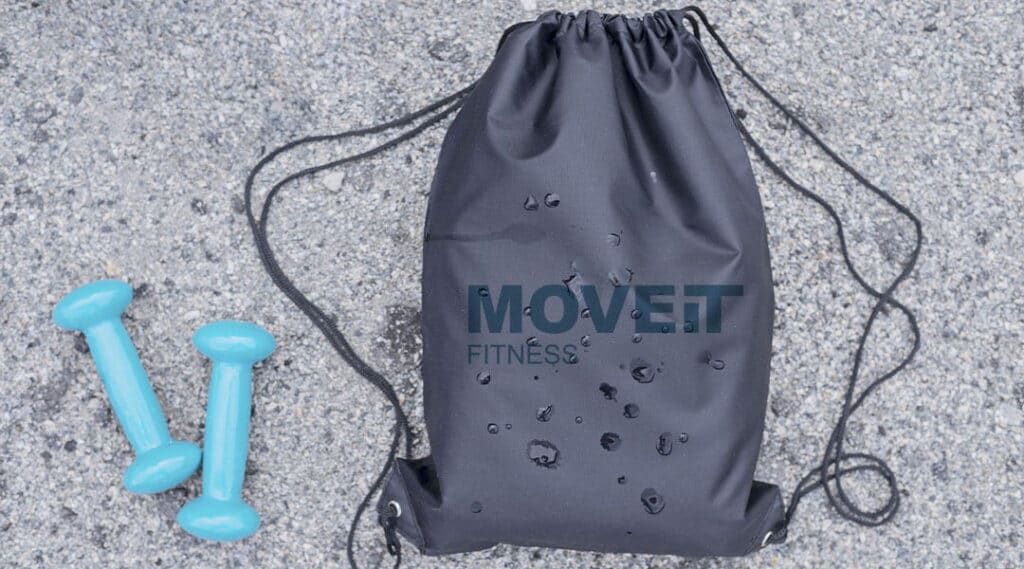
However, you can probably guess which type is the most popular: drawstring backpacks. These dominate the sports sector, whether for specific events such as marathons or for organisations such as gyms and fitness centres.
Classic school backpacks are also widely used, with designs tailored to suit pupils of different ages. Many nurseries, schools and colleges provide students with personalised backpacks featuring the institution’s logo. In some cases, they even include them as part of a welcome pack containing items such as pencil cases, pens or hoodies, helping to create a stronger sense of belonging.
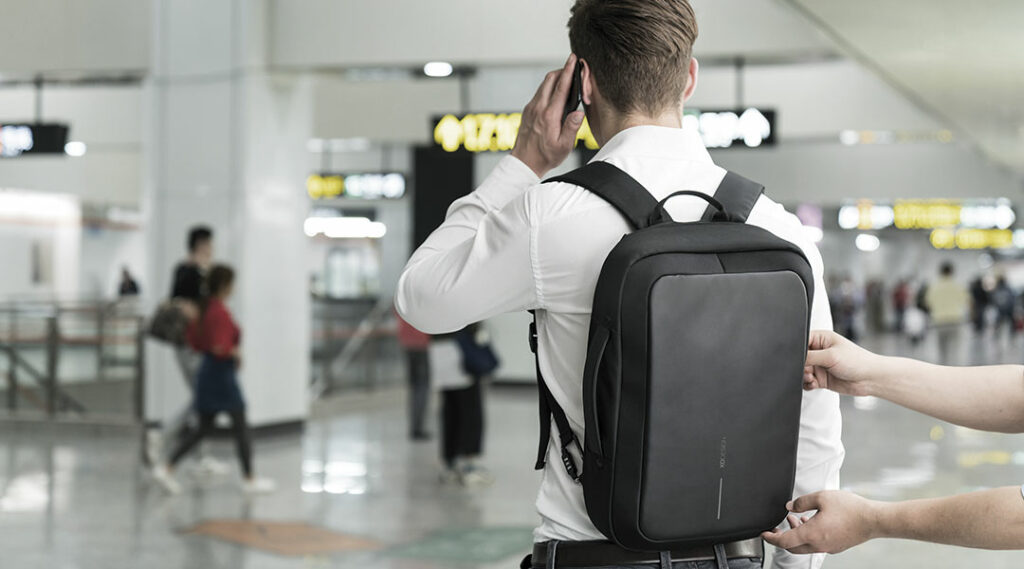
Laptop backpacks have become an essential accessory for employees who travel regularly, whether commuting between towns to visit clients or travelling further afield to attend meetings and conferences. Anti-theft designs are also becoming increasingly popular, featuring concealed zips that make unauthorised access more difficult.
These models have become a favourite choice for companies (as well as individual users) when putting together welcome packs for new employees. Providing a branded backpack encourages staff to use it regularly, both for commuting to the office and in their everyday lives, increasing the company’s visibility wherever it is carried.
Last but not least, there are travel bags. Within this category, you will find sports-style bags, which are ideal for hiking and outdoor trips thanks to their spacious design and multiple compartments. There are also trolley bags, which are compact, easy to manoeuvre and perfect for short journeys. You have probably seen cabin crew or pilots using them at airports.
When do you tend to use a backpack or travel bag the most? Have you ever received a promotional backpack as a gift? Share your experiences with us in the comments section below!