
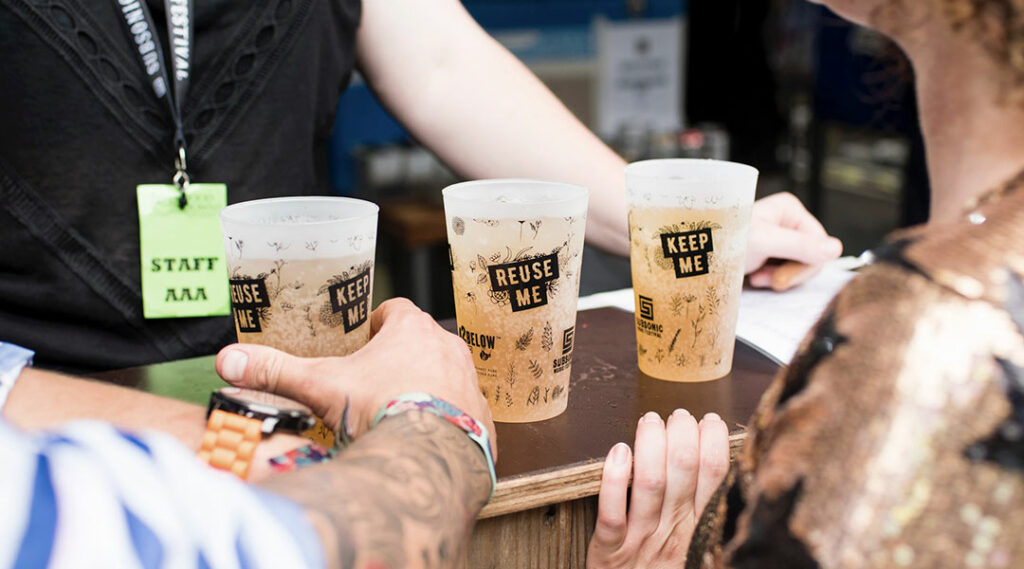
Branded cups are one of the most popular products in corporate merchandising, whether used to reduce plastic consumption in the office or given as gifts at events or in welcome kits. However, choosing the right model involves considering many factors — from materials and capacity to printing techniques and additional features.
In this guide, we’ll help answer some of the most frequently asked questions about this promotional item so your choice is a complete success.
- Materials and sustainability
- Customisation and Branding Techniques
- Functionality and thermal use
- Maintenance and food safety
- Orders, logistics, and samples
FAQs about Branded Cups
Materials and Sustainability
1. What materials are most recommended for daily office use?
In an office environment, hygiene and durability are top priorities. The most recommended materials are:
- Glass: The most neutral material. It doesn’t retain odours or flavours and is very easy to clean. It also adds elegance and professionalism to meeting tables.
- Tritan: If you’re looking for something lightweight and impact-resistant, Tritan is the best alternative to glass. It’s transparent, highly aesthetic, and withstands intensive daily use without scratching easily.
2. What is Tritan and why is it so popular?
Tritan is a next-generation plastic that has become extremely popular in the promotional merchandise sector. This is due to three key reasons:
- Safety: It is BPA-free (Bisphenol A) and free from other bisphenol compounds, making it completely safe for health.
- Durability: It is virtually unbreakable. Unlike conventional plastic, it doesn’t crack or shatter when dropped.
- Aesthetics: It offers the transparency and shine of glass, combined with the lightness of plastic, maintaining a premium look over time.
3. Are there cups made from recycled materials?
Yes. In fact, sustainability is now a top priority, and at Gift Campaign we are committed to being part of this growing eco-friendly trend. That’s why our catalogue of personalised cups includes a wide range of items made from recovered materials.
On one hand, we offer designs made from recycled plastic (RPET), typically sourced from recycled water and soft drink bottles. Thanks to its lightness and clarity, it’s ideal for event cups.
On the other hand, you’ll find models made from recycled stainless steel, which retains the same thermal and durability properties as virgin steel but with a much lower environmental impact. These products often carry the RCS (Recycled Claim Standard) certification.
That said, when it comes to sustainability, we want to emphasise that our collection completely avoids single-use items, focusing exclusively on reusable alternatives that promote responsible consumption and minimise environmental impact.
4. Is choosing a glass cup the same as choosing a crystal one?
Although both terms are often used interchangeably in everyday language, there are key technical differences that can influence your decision depending on the type of corporate gift you’re looking for.
Standard glass is a more robust and cost-effective option, ideal for everyday office use or large-scale events thanks to its durability. In contrast, crystal stands out for its superior brilliance, exceptional clarity, and its distinctive ringing sound when toasting, making it the preferred choice for high-end premium gifts.
5. What are the advantages of each material?
To help you choose the most suitable material for your corporate cups, we’ve prepared a comparison table based on different needs: durability, thermal insulation, sustainability, budget, and recommended use.
Think about how you want to impress your clients and choose the cup that best fits your goals.
| Material | Durability | Thermal insulation | Sustainability | Estimated price | Recommended use |
| Plastic and RPET | High | Low | Medium | Budget-friendly | Mass events and festivals |
| Aluminimum | High | Low | High | Budget-friendly | Leisure and outdoor events |
| Glass / Crystal | Medium (Fragile) | Low | High | Mid-range | Offices and VIP meetings |
| Ceramic | Medium | Medium | Medium | Mid-range | Offices and hot coffee |
| Tritan | Very high | Low | Medium | Mid-range / High | Gyms and premium everyday use |
| Stainless Steel | Very high | Very high (Double walled) | High | Premium | High-end corporate gifts |
| Silicone | High | Low | Medium | Variable | Collapsible cups, travel |
Customisation and Branding Techniques
6. Which technique is best if my logo has many colours?
When a design includes gradients, shadows, or a wide range of tones, traditional spot-colour techniques (such as screen printing) are usually not sufficient. In these cases, the best options are digital transfer or sublimation.
Digital transfer works like a high-resolution print that is applied to the cup, while sublimation embeds the design directly into the material using heat. However, sublimation is only possible on cups with a special coating (typically ceramic or certain polymers) and usually in white. Both methods allow for photo-quality images with fine detail.
7. Can laser engraving be used on plastic cups?
Generally, no. Laser engraving is an erosion technique that burns the surface of the object to reveal the design. In most plastics, this heat would simply melt or deform the material rather than produce a clean finish.
This technique is specifically recommended for metal, wood, or glass. Its main advantage on these materials is that the marking is permanent, elegant, and will not fade — even after intensive dishwasher use.
8. What is 360º wrap-around screen printing?
This is a variation of conventional screen printing designed specifically for cylindrical objects. While standard printing is limited to one side of the cup, wrap-around screen printing rotates the item as the ink is applied, allowing the design to cover almost the entire circumference.
It’s the ideal choice if you want your brand to be visible from any angle or if you’d like a continuous graphic pattern around the whole cup.
9. Can each cup be personalised with an individual employee’s name?
Yes, this is possible with metal cups compatible with laser engraving, as it is one of the few techniques that allows for individual customisation. It enables each unit to be unique without requiring a completely separate production run for each name.
10. How should I send my logo to ensure perfect printing?
The ideal format depends on the chosen technique, but it’s always best to prioritise vector files such as .ai, .eps, .pdf, or .svg. These are essential for techniques like screen printing, pad printing, or laser engraving, as they can be scaled without any loss of quality.
On the other hand, .jpg or .png images are only suitable for digital printing or sublimation, and we always recommend a minimum resolution of 300 dpi to ensure the best possible result.
Functionality and Thermal Performance
11. How long do thermal cups keep drinks hot or cold?
The standard performance of a quality thermal cup typically ranges from 4 to 6 hours for hot drinks and up to 10–12 hours for cold beverages. This can vary depending on external temperature and how often the lid is opened. If you need superior performance, double-wall stainless steel models offer the best results on the market.
12. Do all cups come with a lid?
Not necessarily. Catalogues usually distinguish between standard table cups (open, ideal for meetings or cafés) and “to-go” or travel models, which always include a lid for easy transport. When choosing your model, check whether the lid is press-fit or screw-on, as this affects safety during movement.
13. What is the difference between a leak-resistant lid and a leak-proof lid?
A splash-resistant lid prevents liquid from spilling while you walk or drink, but it may leak if the cup is completely tipped over. In contrast, a leak-proof lid provides a full seal, allowing the cup to be carried in any position without risk of spills.
14. Are there options with built-in straws and handles?
Yes — and they’re a major trend. Cups with ergonomic handles are ideal for larger capacities (400 ml or more), as they make gripping easier. Models with integrated straws are perfect for cold drinks and smoothies, encouraging convenient, regular hydration. Many of these designs are also more sustainable, replacing disposable plastic straws with reusable alternatives.
15. What does “vacuum insulation” mean?
This is the most advanced technology for temperature retention. It involves creating a double metal wall from which the air is removed during manufacturing, forming a vacuum.
With no air between the walls, heat or cold cannot transfer easily (thermal conduction is minimised), meaning the outside of the cup remains at room temperature and free from condensation — regardless of the temperature inside.
Maintenance and Food Safety
16. Can I put my personalised cup in the dishwasher?
Even if the cup material itself is dishwasher-safe, the printed logo may be damaged by high temperatures and harsh detergents. Techniques such as screen printing and pad printing tend to wear over time with intensive wash cycles.
If you need a cup that can safely go in the dishwasher, we recommend laser engraving, as it doesn’t use ink but rather etches the material itself, making it virtually permanent.
17. Are all plastic cups microwave-safe?
Not all cups can withstand microwave heat, especially certain plastics. It’s essential to check the product specifications, contact customer support if needed, or look for the “microwave-safe” symbol (wavy lines over a container) on the base.
Materials like polypropylene (PP) are generally suitable, whereas others like polystyrene may deform or release unwanted substances. When in doubt, it’s safest to heat the liquid in a ceramic mug first and then pour it into the cup.
18. How can I prevent odours in plastic cups?
Unlike glass, plastic is a porous material that can retain smells. A reliable solution is to wash it with a mixture of warm water and baking soda, or let it sit for a few minutes in a solution of water and white vinegar.
These natural ingredients neutralise odour molecules without damaging the material or leaving chemical residues.
19. Do all your cups comply with EU food safety certifications?
Yes, all products in our catalogue strictly comply with European food safety regulations. This ensures that materials are free from toxic substances such as cadmium or lead in paints, and that plastics are BPA-free.
The health of your clients and employees is a priority, which is why we only work with suppliers who rigorously audit the quality of their materials.
Orders, logistics, and samples
20. What is the minimum order quantity for cups?
In the promotional merchandise sector, industrial production requires setting up machinery and specific printing plates for each logo. For this reason, the minimum order quantity typically ranges from 25 to 50 units, depending on the selected model.
This allows production costs to be optimised and ensures a much more competitive unit price compared to manufacturing single items.
21. Can I request a physical sample before placing a large order?
Absolutely. Before making a significant investment, it’s understandable that you’ll want to check the quality firsthand. You can request a physical sample (usually without customisation or with a standard design) to verify size, colour, and durability.
Once you approve both the sample and the visual proof, production of your personalised order will begin.
22. What is the usual delivery time with customisation?
Standard delivery times typically range between 7 and 12 working days after final design approval. This includes the branding process, ink drying, and quality control.
If you have an upcoming event with a tight deadline, it’s best to check in advance, as some models offer express services to shorten delivery times.
23. Do you ship across the UK and Northern Ireland?
Yes, shipping covers mainland UK and Northern Ireland. We work with specialised courier services to ensure delivery directly to your office, warehouse, or event location.
24. What happens if any cups arrive broken or defective?
Cups are fragile products, and although we take every precaution to protect shipments, there is always a small risk during transport. There’s no need to worry: if you receive damaged goods, simply notify us within 24–48 hours of delivery and include a photo of the issue.
Our guarantee policy ensures the immediate replacement of the affected items or a corresponding refund, so you’ll never pay for products that are not in perfect condition.
Choosing the ideal personalised cup is not just about finding an attractive design. It’s about striking the right balance between functionality, sustainable materials, and a branding technique that truly reflects your corporate identity. Whether your goal is to reduce plastic use in the office or to impress at an exclusive event, a practical and high-quality gift always helps build stronger brand loyalty.
If you already know which model you need — or if you still have specific questions about how your logo will look — our team of experts is ready to advise you with no obligation.
Explore our full range of personalised cups and request your free digital mock-up and quote today.